Welcome To DWT Listing Theme
-
All Locations :

Welcome To DWT Listing Theme
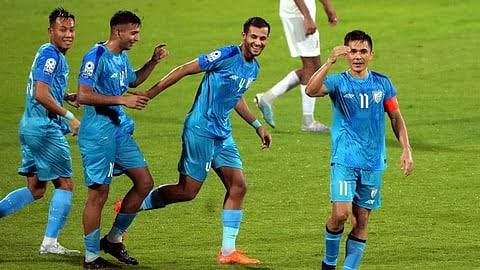
For many Indian families, the idea of a sports academy has changed dramatically. It is no longer simply a place where children go for an hour of evening practice after school.
A good academy can now be a training centre, classroom, networking hub, talent-identification platform and first step toward a professional sporting career.
That shift reflects a broader change in India. Sports are increasingly being treated as part of youth development, education and employment rather than only as extracurricular activities. The government’s Khelo Bharat Niti 2025 specifically calls for stronger talent identification, competitive structures, grassroots participation and better access to sports infrastructure.
The scale of investment is also growing. For 2025–26, the Ministry of Youth Affairs and Sports received ₹3,794 crore, including ₹1,000 crore for Khelo India.
For a teenager with sporting ability, this creates an important possibility: the academy can become the bridge between potential and opportunity.
The journey is still difficult, and joining an academy does not guarantee a professional career. But the pathway is becoming more structured, measurable and accessible than it was for many previous generations.
A young athlete once had to rely heavily on local coaches, school competitions and personal connections to progress. Today, a strong academy can bring several pieces of the development puzzle together.
The athlete may have access to qualified coaching, strength and conditioning, competition exposure, performance analysis, sports medicine and guidance about the next stage of their career.
That changes the question from “Can this child play well?” to “How can this ability be developed over several years?”
India’s formal sports ecosystem is moving in this direction. A July 2025 government response reported 306 academies accredited under Khelo India for training Khelo India Athletes, with 951 Past Champion Athletes deployed as coaches against a sanctioned strength of 1,096.
The geographical spread is important too. The same data listed 42 accredited academies in Maharashtra, 39 in Karnataka, 24 in Punjab, 20 each in Haryana and Telangana, and 16 each in Kerala and Madhya Pradesh.
This does not mean every academy provides the same quality of training. It does show that structured athlete-development environments are becoming a more established part of India’s sporting infrastructure.
The strongest academies increasingly look less like traditional coaching grounds and more like specialised development environments.
A promising badminton player, for example, may spend time on technical drills in the morning, strength training later, video analysis after practice and tournament preparation before competition.
A football academy may combine tactical sessions with fitness testing, match analysis and organised league fixtures.
An athletics academy might monitor sprint mechanics, strength progression, recovery and competition schedules.
The common factor is planned development.
Young athletes are not simply practising harder. They are learning how to train intelligently.
A well-run academy can provide:
That wider support can be especially valuable for families who do not already have experience navigating elite sport.
One of the biggest advantages of a structured academy is visibility.
A talented 12-year-old from a smaller city may be excellent compared with classmates but have no idea how their ability compares with athletes elsewhere.
Regular academy competitions, trials and inter-academy events provide a benchmark.
The athlete might lose initially. That is not necessarily bad.
It tells the coach what needs improvement.
Perhaps the athlete has excellent speed but weak decision-making. Maybe their technique is strong but their fitness falls late in matches. Perhaps they have the physical tools but struggle under competitive pressure.
Those observations help coaches build an individual development plan.
This is exactly the kind of grassroots-to-elite pathway that current national policy is trying to strengthen. The Sports Authority of India describes Khelo India’s talent-identification framework as a structured pathway from grassroots development toward elite sport.
For a young athlete, that can be transformative.
Instead of asking whether they are “naturally talented,” coaches can identify specific skills that can be developed.
The attitude of Indian parents toward sporting careers is changing, although education remains a major priority.
For decades, many families saw sport as something children could enjoy until academic demands became more serious. That mindset was understandable when professional sporting opportunities were limited.
The landscape now offers more possibilities.
India has professional leagues, university competitions, national championships, international pathways, sports scholarships, government-supported training centres and an expanding sports business.
There are also careers around sport beyond becoming an athlete.
A young person who develops deep sporting knowledge could eventually work as a:
This is one reason academies can function as career launchpads even for athletes who do not reach the professional level.
The experience of disciplined training, competition, teamwork and goal-setting can also develop transferable skills.
The government’s 2026–27 sports funding plans explicitly describe sport as a contributor to employment generation, skilling and economic growth, alongside the Khelo India Mission.
Another important change is the professionalisation of coaching.
A modern athlete does not depend entirely on one coach.
There may be a technical coach, fitness trainer, physiotherapist, psychologist and performance analyst working together.
That creates a much richer environment for young athletes.
Data can show where a footballer loses possession most often. Video can reveal a tennis player’s positioning problem. Timing systems can identify where a sprinter loses fractions of a second.
The athlete still needs hard work, but training becomes more precise.
This is particularly valuable during adolescence, when the wrong training load can lead to fatigue, injury or burnout.
Good academies therefore need to understand development, not just performance.
A 13-year-old athlete should not necessarily be treated like a 23-year-old professional.
Growth, school commitments, recovery and psychological wellbeing all matter.
The growth of academies is encouraging, but there is an uncomfortable question: who can afford to participate?
Private academies can vary enormously in price. Fees, equipment, travel, tournament expenses and accommodation can become difficult for middle-income families, especially when children compete nationally.
This creates a risk that sporting talent becomes concentrated among families with greater financial resources.
Government-supported programmes can help address that gap.
Sports Authority of India schemes can provide selected athletes with combinations of expert coaching, equipment, boarding and lodging, competition exposure, education-related expenses, medical support and stipends, depending on the programme.
Khelo India also provides substantial support for selected athletes. SAI states that current Khelo India Athlete support can include funding of ₹6.28 lakh per athlete per year, including a ₹10,000 monthly out-of-pocket allowance, although support varies according to scheme rules.
That type of assistance can change a family’s calculation.
Instead of asking whether they can afford years of training, they can begin looking for recognised pathways, trials and scholarships.
This is where information becomes almost as important as money.
A talented athlete cannot apply for a programme they do not know exists.
Parents sometimes assume that the academy with the highest fee must provide the best development environment.
That is a dangerous shortcut.
Before enrolling a child, families should investigate:
Talk to current athletes and parents if possible.
Ask how the academy handles an athlete who is struggling.
A serious academy should be able to explain how it measures development instead of simply promising future selection.
Families should also be cautious about guaranteed claims such as “national team selection assured” or “professional career guaranteed.”
No legitimate development programme can guarantee that an adolescent will become a professional athlete.
Joining an academy is only the beginning.
The athlete still has to take responsibility for development.
A practical approach is to set goals at three levels.
Short-term goals: improve a particular skill over four to eight weeks.
Medium-term goals: perform consistently in competitions over a season.
Long-term goals: progress to a stronger academy, state-level team, national competition or scholarship opportunity.
The athlete should also learn to review performances honestly.
After a competition, instead of simply asking “Did I win?”, ask:
That habit separates development from simply accumulating practice hours.
Digital sports culture can also influence how young athletes see competition. They may encounter unrelated platforms and terms such as gold365 online while consuming sports content, but their development should remain centred on recognised coaching, legitimate competitions and evidence-based training.
Myth: Joining an academy guarantees a professional career.
It does not. An academy provides an environment and opportunities, but progression depends on ability, development, health, consistency, competition results and many factors outside an athlete’s control.
Myth: More training always produces better athletes.
Not necessarily. Training has to be balanced with recovery, nutrition, sleep, education and appropriate workload.
Myth: The most expensive academy is the best.
Fees do not automatically reflect coaching quality. Track record, athlete development, staff expertise and competition opportunities are more useful indicators.
Myth: Only children who start extremely young can succeed.
Starting age matters differently across sports. Some disciplines require early technical development, while others allow athletes to specialise later.
Myth: Losing competitions means an athlete is not talented.
Competition is part of development. A young athlete may lose repeatedly while learning skills that later become strengths.
Myth: Academies are only for future professionals.
Good academies can also help recreational athletes develop fitness, discipline, confidence and sporting skills without pursuing elite competition.
Why are sports academies becoming popular in India?
They offer structured coaching, better facilities, competition exposure and clearer pathways toward state, national and professional opportunities. India’s wider sports policies are also placing greater emphasis on talent identification and grassroots development.
Are sports academies worth joining for young athletes?
They can be, particularly when the academy has qualified coaches, appropriate facilities and regular competition opportunities. The right academy should match the athlete’s age, sport, ability and goals.
How can I find a recognised sports academy in India?
Families can start by checking official lists from the Sports Authority of India and relevant sports federations. SAI maintains information on Khelo India-accredited academies and related athlete-development programmes.
Do government sports academies provide financial support?
Selected programmes can provide substantial assistance, including coaching, equipment, accommodation, competition exposure, medical support and stipends, depending on eligibility and scheme rules.
What sports are available through Indian sports academies?
The range varies by programme and location. Government-supported systems cover disciplines including athletics, boxing, badminton, football, wrestling, shooting, weightlifting, swimming and several other Olympic and indigenous sports.
Can a child attend an academy while continuing school?
Yes. In fact, maintaining education alongside sport is important. Families should look for programmes that understand school schedules and provide a realistic balance between academic and athletic commitments.
What should parents ask before paying academy fees?
Ask about coach qualifications, athlete-to-coach ratios, competition exposure, injury management, safeguarding, fee transparency, progress assessments and the academy’s record of developing athletes.
For families researching sports online, phrases such as gold365 club can appear alongside a wide variety of sports-related content, but academy decisions should be based on verified sporting credentials and official information.
The emergence of sports academies as career launchpads is ultimately about giving young Indians something they have not always had: a visible route from interest to opportunity.
The strongest academies will not simply produce children who win more competitions. They will develop athletes who understand how to train, compete, recover, communicate and handle setbacks. They will help families navigate a complicated sporting system and, where appropriate, connect talented athletes with higher levels of competition.
India’s sporting future will depend not only on finding exceptional talent but on building environments where that talent can survive and grow. If academies can combine quality coaching, accessible opportunities, education and athlete welfare, they can become some of the most important foundations of the country’s next generation of sporting careers.

