Welcome To DWT Listing Theme
-
All Locations :

Welcome To DWT Listing Theme
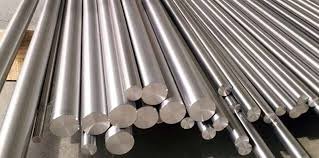
In aerospace engineering, every kilogram counts. Lighter aircraft means better fuel economy, more payload, and higher performance over a service life stretching for decades. That weight pressure drives material selection decisions at every stage of aircraft design. Aluminium 2024 round bars for aerospace applications are among the alloys that consistently meet those demands, standing out for their balance of tensile strength, fatigue endurance and low density. Engineers specify them for fuselage frames, wing attachment fittings, hydraulic housings and structural pins where performance cannot be compromised.
Aluminium 2024 belongs to the high-strength aluminum-copper alloy group. Copper content is between 3.8% and 4.9% by weight, with magnesium at 1.2% to 1.8%, enabling precipitation hardening that pushes tensile strength above 400 MPa in T3 and T4 temper conditions. Manganese at 0.3% to 0.9% refines grain structure and slows crack propagation under cyclic load. Density holds at approximately 2.78 g/cm³, a figure that gives the alloy a decisive mass advantage over steel at 7.85 g/cm³. Round bar stock is available to AMS-QQ-A-225/6 and ASTM B211 specifications, offering aerospace procurement programs the traceability documentation they require.
Aerospace components operate at altitude temperatures as low as -55°C, cycle through pressurization differentials on every flight, and must sustain structural integrity across 100,000 or more load cycles over a 25-year service life. Material selection directly determines whether those demands get met safely and economically. Key requirements include:
Weight reduction: structural mass budgets cascade through fuel burn calculations for the full fleet life
High structural strength: peak gust loads on primary structure can exceed 300 MPa
Fatigue resistance: crack initiation must not occur within the certified retirement life
Temperature stability: mechanical properties must hold from -55°C to 130°C
Regulatory compliance: FAA and EASA mandate certified property minimums with full material traceability
Aluminium 2024 carries decades of flight-proven performance data, which reduces both engineering and certification risk compared to newer alternatives.
The aluminium 2024 is repeatedly specified for a focused set of measurable benefits:
Tensile strength of over 400 MPa at one-third the weight of steel
Fatigue life of 500 million cycles at around 138 MPa stress amplitude in standard testing
Yield strength approaching 345 MPa in T3 temper for primary structural use
Clean chip generation and low tool wear in CNC turning and milling
Dimensional stability that allows tolerances of ±0.01 mm in finish-machined parts
Replacing Aluminium 2024 with steel fittings on 400 structural details can reduce airframe weight by over 800 kg, saving around 2,000 litres of fuel on a long-haul flight. Wing spars, fuselage longerons, and seat track fittings all benefit from this ratio, resulting in increased payload capacity and lower operating costs throughout the certified service life.
Aircraft structure cycles through stress reversals on every flight. Lower wing skin lugs, fuselage lap joints, and door surround frames must survive 100,000 or more cycles without crack initiation. Aluminium 2024’s copper-magnesium microstructure impedes dislocation movement at grain level, slowing crack nucleation and giving maintenance engineers certified fatigue curves to set and defend inspection intervals.
Aluminium 2024 round bars cut cleanly with carbide tooling, produce short chips that clear cutting zones reliably, and hold ±0.01 mm tolerances in CNC turning and milling. Hydraulic actuator bodies, fastener blanks, and bearing housings all reach finished form from bar stock with predictable cycle times and no porosity risk, ensuring consistent mechanical properties across every certified heat lot.
Aluminium 2024 round bars deliver the strength, fatigue life, and machined precision that aerospace structures demand, at a weight penalty no heavier alloy can match. Their decades of flight-proven data, combined with compliance to AMS and ASTM standards, make aluminium 2024 round bars for aerospace applications a rational default choice for structural and machined components alike.

