Welcome To DWT Listing Theme
-
All Locations :

Welcome To DWT Listing Theme
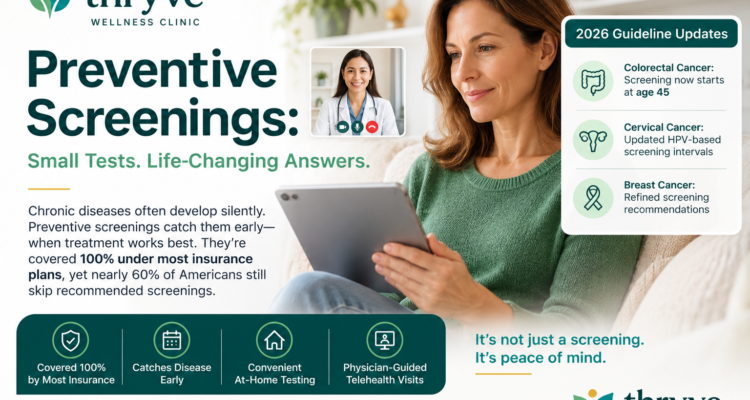
Nearly 60% of Americans skipped a recommended preventive health screening last year. That number is worth sitting with, because most of those screenings aren’t expensive, aren’t hard to get, and are specifically designed to catch serious conditions before they become symptomatic. The gap isn’t really about awareness or cost. It’s about access.
Why Preventive Care Matters More Than It Gets Credit For
Preventive healthcare is built around a simple idea: catch a problem while it’s still manageable, rather than after it’s become an emergency. Chronic conditions like diabetes, hypertension, obesity, and cardiovascular disease continue to rise, and a meaningful share of related healthcare spending goes toward managing conditions that could have been caught, or in some cases prevented outright, through earlier screening. Healthcare overall is shifting away from a purely reactive model — treating disease after it appears — toward one built on prevention, early detection, and personalized risk assessment.
The Guidelines Keep Changing Which Is Exactly Why a Physician Should Guide Them
Preventive screening recommendations aren’t static, and 2026 has already brought several meaningful updates. The U.S. Preventive Services Task Force lowered the recommended starting age for colorectal cancer screening from 50 to 45, a direct response to rising colorectal cancer rates among younger adults. In January 2026, updated federal guidelines expanded cervical cancer screening options for women between 30 and 65. And a late-2024 update to breast cancer screening guidance added supplemental imaging requirements that are now taking effect across most health plans in 2026.
These changes matter practically, not just academically. Someone relying on screening advice they received five or ten years ago may not realize the recommended age or method has shifted since then. This is exactly why preventive screening schedules shouldn’t be built from a generic checklist — they need to be tailored to an individual’s current age, sex, family history, and personal risk factors, and updated as guidelines evolve.
The Part Most People Don’t Realize: Most of This Is Free
Under the Affordable Care Act, non-grandfathered health plans are required to cover preventive services rated A or B by the U.S. Preventive Services Task Force, along with recommended immunizations and additional women’s preventive services, without any deductible, copay, or coinsurance as long as they’re delivered in-network. In other words, the majority of adult preventive screenings most people qualify for cost nothing out of pocket.
That makes the nearly 60% skip rate even more telling. If cost isn’t the primary barrier for most people, something else is keeping adults from scheduling screenings they’re already entitled to receive for free.
Why People Still Skip Screenings Anyway
The real barriers tend to be logistical rather than financial: taking time off work for a lab visit, coordinating a separate appointment for bloodwork versus imaging versus a physical exam, uncertainty about which screenings actually apply at a given age, and the simple friction of fitting one more errand into an already full schedule. None of these barriers have anything to do with whether someone values their health — they have everything to do with how inconvenient the traditional preventive care model can be.
How Telehealth and Mobile Testing Actually Close the Gap
This is where the delivery model matters as much as the medicine. A telehealth consultation can walk a patient through exactly which screenings apply to them based on age, sex, and risk factors without requiring a trip to a physical office just to have that conversation. Mobile phlebotomy takes it a step further by bringing the blood draw itself to a patient’s home or workplace, removing the single biggest logistical barrier to actually completing a screening panel. Comprehensive biomarker testing can also consolidate what used to require several separate lab orders into one draw, covering metabolic, hormonal, and cardiovascular risk markers in a single visit.
None of this replaces screenings that require in-person procedures, like certain imaging or endoscopic exams those still need to be scheduled through the appropriate specialist. But for the bloodwork-based screenings that make up a large share of routine preventive care, remote access removes most of the friction that causes people to keep putting it off.
What a Modern Preventive Care Visit Actually Looks Like
A well-structured telehealth preventive care visit generally starts with a physician reviewing personal and family health history to determine which screenings are actually relevant right now, rather than applying a blanket checklist. From there, a mobile phlebotomy visit handles the necessary bloodwork without requiring a separate trip to a lab. Results get reviewed directly with a physician, who can flag anything that needs follow-up imaging, referrals, or additional testing, and the whole schedule gets revisited periodically as guidelines and personal risk factors change over time.
Conclusion
The science behind preventive screening is well established, the guidelines are specific and frequently updated, and for most adults, the majority of it is already covered at no cost. What’s been missing for a lot of people is a model that fits into an actual schedule. THRYVE Wellness Medical builds its preventive care approach around exactly that gap for patients across Texas and South Carolina telehealth physician consultations, mobile phlebotomy, and 300+ biomarker testing designed to make routine screening something that fits into your week instead of competing with it. The best time to get screened is before anything feels wrong; the easiest time is whenever it actually fits your schedule, and that’s increasingly possible without setting foot in a waiting room.

