Welcome To DWT Listing Theme
-
All Locations :

Welcome To DWT Listing Theme
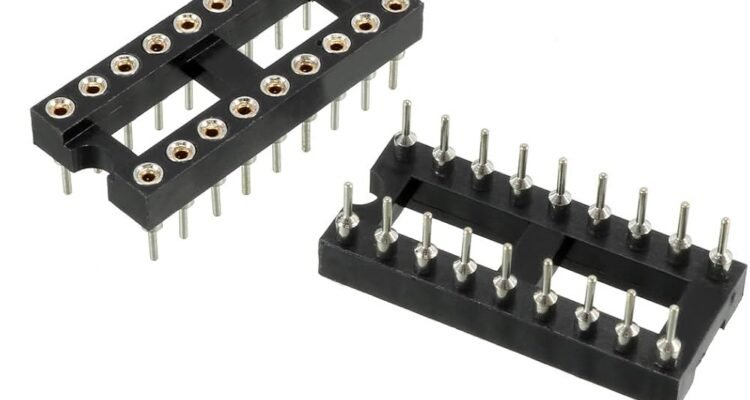
Integrated circuits perform essential processing, control, memory, timing, and communication functions within electronic equipment. Although these devices are often soldered directly onto printed circuit boards, permanent mounting is not always the most practical option. Engineers may need to test different components, update programmed devices, replace failed ICs, or connect a package that does not match the available board footprint.
IC Socket Adapters create an accessible connection between an integrated circuit and its operating platform. They can be used with printed circuit boards, programmers, development systems, test equipment, and laboratory fixtures. By providing a removable interface, they help reduce complicated rework while supporting greater flexibility throughout product development and maintenance.
IC Socket Adapters connect the terminals of an integrated circuit to corresponding electrical points on another device or board. Their construction varies according to the package, pin layout, mounting method, and intended operating conditions.
Some adapters simply hold an IC above a board, while others convert between completely different package formats. More advanced designs may include precision contacts, locking mechanisms, routed circuit boards, or specialised structures for automated testing.
Their primary functions include:
Before an electronic product enters full production, its components must be evaluated under realistic operating conditions. Engineers may compare several IC options to identify the most suitable device for performance, availability, power consumption, or cost.
IC Socket Adapters allow each candidate device to be connected to the same development platform. This removes the need to permanently solder every IC being tested.
During validation, adapters can support:
The ability to exchange devices quickly makes it easier to identify performance differences and confirm whether a selected IC meets the design requirements.
The contacts inside an adapter create the conductive path between the IC and the target system. They must maintain sufficient pressure against the device terminals without damaging them.
Poor contact can cause voltage drops, signal interruption, unstable measurements, or complete circuit failure. Precision contact construction helps maintain consistent continuity across every pin.
Exposure to moisture, air, dust, and contaminants can affect conductive surfaces. Contact plating helps reduce oxidation and preserve electrical performance.
Gold-plated contacts are frequently used in demanding test and programming applications because they provide reliable conductivity and strong corrosion resistance. Tin or nickel finishes may be suitable for general applications where operating conditions are less severe.
An adapter used during occasional prototyping may experience only a few insertion cycles. In comparison, a production testing adapter may hold thousands of devices.
The expected insertion frequency should be considered when selecting contact materials and socket construction. High-cycle models are designed to retain their contact pressure after repeated use.
Integrated circuits are manufactured in numerous shapes and connection formats. IC Socket Adapters can be designed for common and specialised packages.
Frequently supported formats include:
An adapter may convert a compact surface-mount device into a layout that can be inserted into a standard development board. It may also connect a modern replacement IC to an older socket footprint.
Fault diagnosis can be difficult when an IC is permanently attached to a board. Technicians may need to determine whether the device itself is faulty or whether the problem is caused by power delivery, signal routing, or another component.
A socketed arrangement allows the suspected IC to be removed and replaced with a known working device. This provides a simple method for isolating the cause of the fault.
Adapters can also provide easier access to test points. Engineers may measure voltage, continuity, timing, or communication signals while the IC remains connected to the circuit.
Troubleshooting benefits include:
Many electronic systems contain programmable devices that require frequent software changes during development. Microcontrollers, memory components, and programmable logic devices may need to be removed, reprogrammed, and tested repeatedly.
IC Socket Adapters make this process more manageable. A device can be transferred between a programmer and the development circuit without soldering work.
Specialised programming adapters may use zero-insertion-force mechanisms. These allow the IC to be placed into position without pressing it against tight contacts. A lever or cover then secures the device and creates the electrical connection.
This design helps protect delicate pins while improving programming speed and consistency.
Every adapter introduces additional conductive material between the integrated circuit and the board. This may slightly affect circuit behaviour, particularly in high-speed, radio-frequency, low-voltage, or precision measurement applications.
Important electrical characteristics include:
For slower digital circuits, these effects may be minimal. High-frequency circuits require adapters with short signal paths and layouts designed to reduce interference.
An electrically compatible adapter may still be unsuitable if it does not fit the available space. Package dimensions, adapter height, pin arrangement, and nearby components must all be examined.
Key mechanical considerations include:
An adapter can raise the IC above the board, which may affect cooling or prevent an enclosure from closing. Accurate measurements are therefore essential before installation.
IC Socket Adapters support work across many electronic sectors, including:
Their adaptability makes them useful whenever integrated circuits must remain accessible, replaceable, or compatible with an alternative connection format.
Most adapter-related problems result from incorrect orientation, damaged pins, poor soldering, or incompatible pin mapping.
Reliable installation practices include:
Careful handling protects both the integrated circuit and the adapter while reducing the possibility of intermittent faults.
IC Socket Adapters provide an effective way to connect, test, programme, replace, and evaluate integrated circuits without relying on permanent direct mounting. They improve access to important devices, simplify troubleshooting, support package conversion, and help protect printed circuit boards from repeated soldering.
The correct choice depends on package dimensions, pin configuration, contact quality, electrical performance, operating environment, available space, and expected insertion cycles. When these requirements are matched accurately, IC Socket Adapters can improve development efficiency, maintenance flexibility, and long-term circuit reliability.

