Welcome To DWT Listing Theme
-
All Locations :

Welcome To DWT Listing Theme
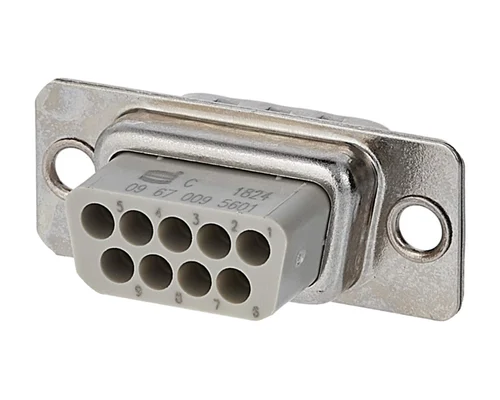
Crimp D-sub Connectors are widely used in electrical and electronic systems where secure multi-contact connections are required in a compact format. Their combination of a D-shaped shell, removable crimp contacts, and organised wire positioning makes them suitable for industrial equipment, communication systems, instrumentation, control panels, and custom cable assemblies.
The crimp termination method gives these connectors an important advantage. Instead of soldering wires directly onto connector terminals, technicians attach individual contacts to conductors using controlled mechanical pressure. The finished contacts are then inserted into the connector housing. This process supports efficient assembly, maintenance, and replacement while helping maintain reliable electrical performance.
The primary purpose of Crimp D-sub Connectors is to provide a structured interface between multiple electrical conductors and compatible electronic equipment. A single connector can organise numerous signal or control wires inside a relatively small space.
They are especially useful where equipment must be disconnected for maintenance, replacement, installation, or testing.
Common benefits include:
These advantages make the connector format useful across both established and modern electrical systems.
Crimp termination depends on precisely compressing a contact barrel around a conductor. The process begins by removing a controlled length of insulation from the wire. The exposed conductor is then placed inside the barrel section of the selected contact.
A compatible crimping tool applies pressure around the barrel. This creates a close mechanical and electrical connection between the contact and conductor.
After termination, the contact is pushed into the correct cavity in the D-sub housing. An internal retention mechanism keeps the contact securely positioned until a suitable extraction tool is used.
Wire preparation directly affects the quality of the finished termination. Excessive stripping can expose too much conductor, while insufficient stripping may prevent proper contact engagement.
Conductors should remain clean and undamaged before crimping. Cutting or weakening strands can reduce mechanical strength and potentially affect current-carrying capability.
Crimp D-sub Connectors normally consist of several parts that work together to provide electrical continuity and physical protection.
The housing contains a defined pattern of contact cavities. It keeps individual terminals separated and correctly aligned with the mating connector.
Contacts are typically available as pins or sockets. The required type depends on the connector configuration and mating interface.
The outer shell strengthens the connector body and provides the familiar D-shaped profile. This shape acts as a basic polarising feature, helping prevent incorrect orientation.
A backshell covers and protects the cable termination area. Depending on the design, it may also provide strain relief, cable clamping, shielding, or grounding support.
Screws or locking components can secure the connector once it is mated. This is particularly useful where vibration or cable movement could cause accidental separation.
The flexible design of Crimp D-sub Connectors makes them suitable for numerous professional environments. They are frequently chosen where multiple conductors must connect through one organised interface.
Typical applications include:
They are also commonly encountered in existing equipment where maintaining compatibility with established interfaces is essential.
Industrial systems often contain numerous control, monitoring, and communication circuits. A removable multi-contact connector allows sections of machinery to be disconnected without disturbing permanent wiring.
Crimp D-sub Connectors can help technicians replace modules, isolate equipment, and perform maintenance more efficiently.
The use of locking hardware is another advantage in industrial environments. Properly secured connectors are less likely to separate because of vibration or accidental cable movement.
The required number of contact positions depends on how many separate electrical circuits need to pass through the connector.
Designers should consider both current requirements and potential future expansion. Choosing a connector with limited spare capacity may restrict later system modifications, while an unnecessarily large connector can consume valuable panel or enclosure space.
The contact arrangement should also match the mating equipment exactly.
Electrical ratings vary between connector designs, contact types, and manufacturers. Selecting a connector only by appearance can lead to incorrect installation.
Important electrical characteristics include:
The selected connector should always meet the requirements of the actual circuit and operating environment.
Electrical reliability depends partly on protecting the cable termination from mechanical stress. Repeated pulling, twisting, and bending can weaken conductors close to their contacts if suitable strain relief is not provided.
A compatible backshell and cable clamp help transfer these forces away from individual terminations.
This protection is particularly valuable for movable equipment, test cables, portable systems, and machinery exposed to regular vibration.
Careful assembly helps prevent common problems such as loose contacts, incorrect cavity placement, damaged terminals, and unreliable continuity.
Recommended practices include:
Clear documentation is also useful when several similar conductors are installed inside one connector.
Serviceability is one of the strongest practical benefits of Crimp D-sub Connectors. Because contacts are individually installed, a damaged terminal can often be removed using an extraction tool and replaced without rebuilding the complete connector.
This can reduce repair time and component waste, particularly in complex cable harnesses.
Technicians can also inspect or modify individual circuits while keeping the remaining connector structure intact.
Crimp D-sub Connectors offer a practical combination of organised wiring, mechanical stability, serviceability, and straightforward assembly. Their removable contacts make repairs and modifications easier, while compatible backshells and locking hardware provide additional protection.
Correct component selection is essential for reliable performance. Contact type, conductor size, connector configuration, electrical rating, tooling, and mechanical accessories should all match the intended installation.
When assembled correctly, Crimp D-sub Connectors provide durable multi-contact connections for industrial controls, communications, instrumentation, testing equipment, and many other electronic systems. Their proven construction and flexible termination method continue to make them a dependable solution wherever secure, maintainable, and neatly organised cable connections are required.

