
How to Use Pencil Marks in Sudoku Without Getting Confused
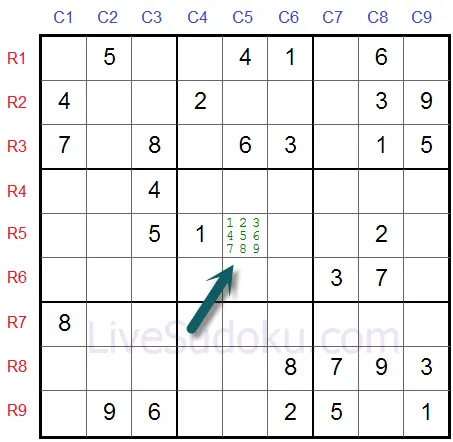
Sudoku becomes harder to follow when several empty cells each seem to allow several numbers. Trying to remember every possibility can leave you checking the same squares repeatedly. Pencil marks solve that organizational problem: they record which digits remain possible while keeping uncertain choices separate from confirmed answers. For readers exploring https://sudoku-it.org/, this guide explains how to create useful notes, maintain them, and recognize the deductions they reveal. The key is consistency. A small set of accurate notes is more useful than a crowded board filled with assumptions.
What Sudoku Pencil Marks Actually Mean
Pencil marks are small numbers written inside an empty cell to represent its remaining possibilities, usually called candidates. If a cell contains notes for 2, 6, and 8, none of those digits has yet been eliminated. The notes do not indicate that one is more likely than another.
Keep candidate notes visually distinct from completed entries. On paper, write them small and lightly. In a digital puzzle, check whether you are entering notes or an answer before selecting a digit.
That distinction prevents a common mistake: turning an uncertain possibility into a confirmed placement without new evidence.
Find Candidates With Three Checks
In classic Sudoku, each row, column, and three-by-three box must contain the digits 1 through 9 exactly once. A cell’s initial candidates are the digits not already present in any of those three groups.
Use this process:
- Start with the digits 1 through 9.
- Remove every digit already in the cell’s row.
- Remove every digit already in its column.
- Remove every digit already in its box.
- Record the remaining possibilities.
For a hypothetical example, suppose the combined digits visible in those groups are 1, 3, 4, 5, 7, and 9. The cell’s candidates are therefore 2, 6, and 8.
You are recording what the existing placements permit, not predicting the final answer.
Decide How Much of the Board to Annotate
You do not have to fill every empty cell with notes immediately. Start by scanning for straightforward placements, especially in nearly completed rows, columns, and boxes.
When visual checking stops producing answers, add notes in the area you want to investigate. Recording all candidates in those cells provides a reliable starting point.
There is an important limitation: notes in only part of a row cannot prove that a digit has only one possible position throughout that row. Unannotated cells still need checking.
For beginner practice, avoid mixing complete candidate lists with partial reminders unless you can clearly distinguish them. An absent note should not accidentally become evidence that a digit is impossible.
Update Notes After Every Confirmed Placement
Suppose your hypothetical cell contains 2, 6, and 8. You then correctly place 6 elsewhere in the same row. Remove 6 from that cell’s notes, leaving 2 and 8.
Later, a confirmed 2 appears in its column. Removing 2 leaves only 8, which must occupy the cell. This is a naked single: one cell has only one remaining candidate.
After each placement, check the affected row, column, and box before moving elsewhere. This keeps your notes aligned with the board.
If an entry is undone, reconsider any candidates removed because of it. Correcting the large number alone may leave the smaller notes incomplete.
Use Notes to Find Hidden Singles
A hidden single appears when a digit has only one possible location within a row, column, or box. The relevant cell may still contain several other candidates.
Imagine three empty cells in a row with these complete candidate lists:
- First cell: 1 or 7
- Second cell: 1, 4, or 7
- Third cell: 1 or 7
Only the second cell can contain 4, so that is its answer.
This technique requires looking across a group rather than studying one cell alone. Before relying on it, confirm that every other empty cell in that group genuinely excludes the digit.
Recognize When Two Cells Reserve Two Digits
Notes can also reveal a naked pair. When two cells in the same group each have exactly the same two candidates, those digits must occupy those cells in some order. Remove both digits from other cells in that shared group.
For example, two cells in a box might each contain only 3 and 9. Another cell in that box has candidates 3, 5, and 9. Eliminating the reserved digits leaves 5.
Do not apply this reasoning if either pair cell has another candidate. A cell containing 3, 6, and 9 does not qualify.
Troubleshoot Notes That Stop Making Sense
If an empty cell loses every candidate, pause. You may have entered an incorrect answer, removed a valid possibility, or copied a clue incorrectly. Review recent changes before making another placement.
If a supposed pair produces contradictions, check whether both candidate lists were complete. If a hidden single seems doubtful, inspect unannotated cells in the same group.
Digital tools may handle notes differently, so verify whether candidate removal happens automatically. Never assume an interface has updated information simply because you entered a number.
Practice One Clean Sequence
For your next session, use this routine alongside the puzzle you choose after visiting http://www.sudoku-it.org/: scan first, record candidates carefully, confirm one deduction, and update the affected notes.
Keep the goal modest. You do not need to master every pattern at once. Learn to trust the information you have written, and each new placement will become easier to explain.