Welcome To DWT Listing Theme
-
All Locations :

Welcome To DWT Listing Theme
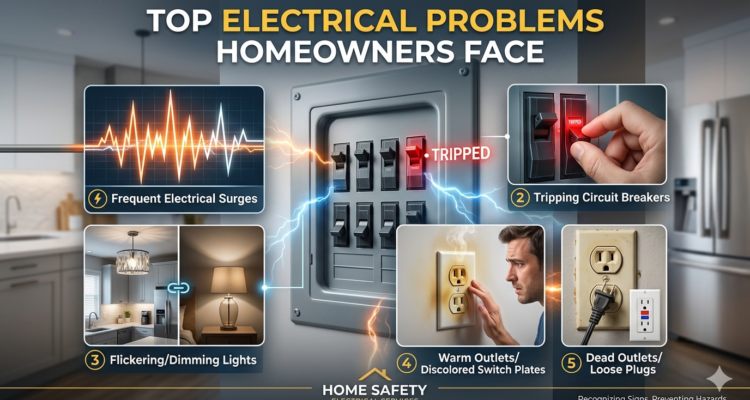
A modern home relies entirely on a steady, safe flow of electricity to power everything from central HVAC systems and kitchen appliances to smartphones and security systems. Most of the time, this intricate grid of wires, switches, and panels operates quietly behind our walls without a hitch.
However, because electrical infrastructure is invisible, it is easy to ignore minor symptoms of wear and tear. Overlooking common home electrical problems isn’t just an inconvenience—it can lead to severe damage to electronics, costly appliance failure, and significant fire hazards.
Recognizing the warning signs of an unstable electrical system can help you protect your investment and keep your household safe. Here are the top electrical issues every homeowner should watch out for.
An electrical surge occurs when there is a sudden, temporary spike in the voltage running through your home’s wiring. While lightning strikes are a well-known cause, most surges are actually internal. They are frequently triggered by high-energy appliances—like refrigerators, air conditioners, or space heaters—cycling on and off.
If your home experiences frequent, micro-surges, you might notice your digital clocks resetting or your electronic devices malfunctioning. Over time, these consistent voltage spikes degrade the delicate microchips inside your television, computers, and smart devices, shortening their lifespan dramatically.
Your electrical panel is equipped with circuit breakers designed to shut off the flow of electricity automatically if a circuit becomes overloaded. If a circuit breaker trips occasionally when you run a microwave and a hair dryer at the same time, it is simply doing its job.
However, if you find yourself constantly resetting the same breaker, you are facing a deeper issue. Frequent tripping circuit breakers indicate either a severely overloaded circuit, a short circuit (where a hot wire touches a neutral wire), or a ground fault. Operating a system under these conditions can overheat the wiring and present a serious fire risk.
If your lights flicker or dim unexpectedly, the issue rarely lies within the lightbulb itself.
Localized Flickering: If a single lamp flickers, the fixture may have a loose switch or plug.
Whole-Room Dimming: If the lights dim throughout an entire room whenever a large appliance (like a vacuum or washing machine) kicks on, it means the appliance is pulling more current than the circuit can comfortably handle.
Widespread Flickering: If lights flicker randomly across different rooms, it often points to a loose main service connection at your electrical panel or weather-damaged outdoor drop wires. This requires immediate attention from certified electricians.
An electrical outlet or light switch should never feel warm to the touch. If you unplug an appliance and notice the wall plate feels hot, or if you spot any subtle brown, black, or yellowish discoloration around the plug slots, turn off the breaker to that room immediately.
Warmth and discoloration are classic signs of electrical arcing, which occurs when loose wires or corroded terminals cause electricity to jump across gaps. Arcing generates extreme thermal energy that can melt plastic covers and ignite surrounding drywall insulation.
Over time, the internal metal springs inside an electrical outlet wear out and lose their grip. If cords slip out of an outlet easily under their own weight, it creates a loose electrical connection that can cause arcing and sparks.
Additionally, if certain outlets stop working entirely (often referred to as “dead outlets”), it could mean a wire has completely disconnected behind the wall, or a Ground Fault Circuit Interrupter (GFCI) outlet upstream has tripped and cut off the current down the line.
When a faucet leaks, a DIY patch job might ruin your cabinets. However, when it comes to electricity, a mistake can be fatal. Working inside a live electrical panel or handling faulty wiring without the proper training, diagnostic tools, and safety gear exposes you to severe shock hazards and violates local building codes.
If your home is exhibiting any of these warning signs, don’t wait for a dangerous short circuit to occur. Investing in professional diagnostics and targeted professional electrical repairs is the safest, most cost-effective way to secure your property. For immediate assistance with burning odors, sparks, or persistent breaker issues, contact emergency electrician services right away to restore safety and peace of mind to your home.

