
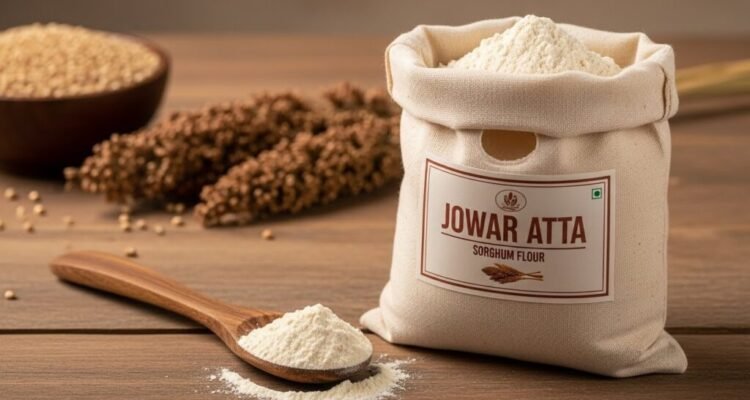
Walk into any kitchen in North Karnataka or Maharashtra during winter, and you’ll likely find a stack of soft, warm bhakris made from one humble grain — jowar. Today, this age-old staple is making a comeback across Indian households, not just for its taste and tradition, but for the impressive nutrition it packs into every roti. If you’ve been hearing about jowar atta and wondering whether it deserves a spot in your kitchen, this guide covers everything you need to know.
What Is Jowar Atta?
Jowar atta is flour ground from sorghum, one of the oldest cultivated grains in the world. Unlike wheat, jowar contains no gluten, which makes it a natural choice for people managing gluten intolerance or simply looking to diversify their daily grain intake. For generations, jowar has been a dietary staple in states like Maharashtra, Karnataka, Telangana, and parts of Madhya Pradesh, where it’s traditionally used to make bhakri, a thick, round flatbread eaten with a dollop of ghee, chutney, or spicy curry.
What sets good jowar atta apart is how it’s milled. Traditional stone-grinding preserves the grain’s natural fibre, minerals, and aroma, unlike mass-produced versions that are often milled in bulk and left sitting on shelves for months before reaching your kitchen. Freshly milled jowar atta has a distinctly nutty smell and a slightly sweet, earthy taste that fades the longer it sits after grinding.
Nutritional Profile of Jowar Atta
Understanding what’s actually in your flour helps you make an informed choice. Here’s what 100g of jowar atta typically offers:
| Nutrient | Amount per 100g |
|---|---|
| Dietary Fibre | 7 g |
| Protein | 11.0 g |
| Key Minerals | Iron & Manganese |
| Glycemic Index | Low (slow-release energy) |
| Gluten | None (naturally gluten-free) |
These numbers matter more than they might seem at first glance. A high-fibre, high-protein flour with a low glycemic index checks several boxes that health-conscious eaters are actively looking for.
Health Benefits of Jowar Atta
1. Naturally Gluten-Free
For people with celiac disease or gluten sensitivity, finding a flour that doesn’t compromise on taste or texture can be a challenge. Jowar atta solves this problem elegantly — it’s pure sorghum with zero gluten content, so it can be used to make rotis, bhakris, and parathas without any of the digestive discomfort associated with gluten.
2. Supports Blood Sugar Management
One of the standout qualities of jowar is its low glycemic index. Foods with a low GI release glucose into the bloodstream slowly, which helps avoid the sharp spikes and crashes associated with high-GI foods like refined wheat or white rice. This makes jowar atta a sensible everyday choice for anyone keeping an eye on their blood sugar levels, though it’s always wise to consult your doctor for personalised dietary targets.
3. Aids Digestion
With 7g of dietary fibre per 100g, jowar atta supports regular digestion and gut health. Fibre-rich diets are linked to improved bowel regularity, better satiety, and a healthier gut microbiome. If you’re new to jowar, it’s best to introduce it gradually — start by mixing 25-30% jowar atta with your regular wheat atta and slowly increase the ratio over a couple of weeks as your digestive system adjusts.
4. A Good Source of Plant Protein and Minerals
At 11g of protein per 100g, jowar atta is a respectable plant-based protein source, especially useful for vegetarians looking to diversify their protein intake beyond legumes and dairy. It also brings iron and manganese to the table — two minerals essential for energy metabolism, red blood cell production, and bone health.
How to Use Jowar Atta in Your Kitchen
Jowar atta is versatile, but because it lacks gluten, it behaves differently from wheat flour when kneaded. Here are some practical tips:
- Use warm water. Kneading jowar atta with warm or hot water helps bind the dough better, since there’s no gluten to hold it together.
- Rest the dough. Letting the dough rest for a few minutes before rolling makes it easier to work with.
- Roll gently. Because the dough is more delicate than wheat dough, roll it out gently and avoid excessive stretching.
- Start with a blend. If you’re new to jowar, a 50:50 mix with wheat atta makes the transition smoother while you get used to handling the dough.
Popular dishes made with jowar atta include:
- Soft jowar rotis
- Crisp bhakris
- Parathas
- Cheela (savoury pancakes)
- Healthy tea-time snacks
Jowar Atta vs Other Millet Flours
Jowar is often compared to other millets like ragi (finger millet) and bajra (pearl millet), each of which brings its own nutritional strengths. Jowar tends to be milder in flavour and lighter on the stomach compared to bajra, making it a good starting point for those new to millet flours. Ragi, on the other hand, is particularly known for its calcium content. Depending on your specific health goals — whether it’s bone health, blood sugar management, or digestion — you might rotate between these flours rather than relying on just one.
Why Freshness Matters
One aspect that’s often overlooked when buying jowar atta is how fresh it actually is. Because jowar atta contains no preservatives, its nutritional quality and flavour begin to degrade once it’s milled. Flour that has been sitting in a warehouse or on a store shelf for weeks or months loses much of its aroma and some of its nutritional value.
The best practice is to buy jowar atta that is milled close to the time of purchase — ideally within hours of your order — rather than opting for pre-milled stock that’s been sitting around. Look for brands that are transparent about their milling process, ideally ones that use traditional stone-grinding methods, which preserve the grain’s natural fibre and nutrients better than high-speed industrial milling.
Storage Tips for Jowar Atta
Since jowar atta has no preservatives, proper storage is essential to maintain its freshness:
- Store in an airtight container to prevent moisture and pests.
- Keep it in a cool, dry place away from direct sunlight.
- Use within a few weeks of purchase for the best flavour and nutrition.
- Avoid storing in humid areas like near the stove or sink.
Frequently Asked Questions About Jowar Atta
Is jowar atta gluten-free?
Yes, jowar (sorghum) is naturally gluten-free, making it suitable for people with gluten intolerance or celiac disease.
Is jowar atta good for diabetics?
Jowar atta has a low glycemic index and good fibre content, which means it releases energy slowly and doesn’t cause sharp blood sugar spikes. That said, it’s best to consult your doctor for advice tailored to your specific condition.
Can I eat jowar roti every day?
Yes, jowar roti is light and fibre-rich, making it suitable for daily consumption. If you’re new to it, ease in gradually by mixing it with wheat atta and increasing the ratio over two to three weeks.
What can I make with jowar atta?
Jowar atta can be used to make soft rotis, crisp bhakris, parathas, cheela, and various healthy snacks.
How do I make soft jowar rotis?
Knead the dough with warm water, let it rest, and roll it out gently. A 50:50 blend of jowar and wheat atta makes the process easier if you’re just starting out.
How should I store jowar atta?
Keep it airtight, in a cool and dry place, and use it within a few weeks since it contains no preservatives.
Final Thoughts
Jowar atta isn’t a fleeting health trend — it’s a grain that Indian households have relied on for generations, now getting fresh recognition for its fibre, protein, and gluten-free profile. Whether you’re managing blood sugar, working on digestion, or simply looking to bring more variety into your daily rotis, jowar atta is a simple, practical addition to your kitchen staples. The key is choosing fresh, well-milled jowar atta and easing it into your diet gradually so your body adjusts comfortably.

