
Planning a New Zealand Tour: How to Pace Your Route Between Both Islands
Planning a New Zealand tour starts with a reality check that surprises many first-time visitors: map distances rarely tell you how long a day on the road will actually take. A stretch of road that looks brief on paper can wind along coastal cliffs, cross single-lane bridges, climb steep alpine passes, or trail behind slower campervans and farm vehicles, turning a seemingly short drive into a half-day commitment. With international visitor arrivals continuing to climb past 3.6 million annually, popular routes and towns see steady movement, making thoughtful scheduling even more valuable. When you organize a New Zealand tour around realistic driving hours rather than aggressive mileage goals, the trip shifts from a race against the clock into an experience worth savoring.
The best New Zealand tour is shaped by how you want to feel each day, not by how many pins you drop on a map. Rushing from one famous lookout to the next with barely enough time to step out of the car leaves little room to notice local details, such as morning mist lifting off a harbor, neighborhood bakeries opening early, or sudden shifts in mountain light. Slowing down does not mean missing out; it often means seeing more clearly because you have the energy and attention to stay present.
Structuring a New Zealand Tour Around Realistic Driving Days
Why Driving Hours Matter More Than Kilometers
One of the easiest mistakes in planning a New Zealand tour is estimating travel time the way you might on a multi-lane expressway. Much of the country relies on winding two-lane highways with tight bends, elevation climbs, and occasional passing lanes where speeds naturally adjust to road geometry and scenery. Factor in jet lag after long international flights, left-hand driving rules if you come from a right-hand-drive country, and changing weather, and rushing becomes exhausting quickly. Adding a buffer of 20 to 30 percent to map estimates gives you space to pull over safely at marked viewpoints, take stretch breaks, and reach your accommodation before dusk.
Choosing Self-Drive Freedom or Guided Travel
How you get around defines the daily rhythm of any New Zealand tour. Renting a car or campervan gives you freedom to linger when skies clear over a lake or adjust plans if heavy rain settles into a valley. On the other hand, small-group coach tours, scenic rail links, and organized transfers remove the burden of navigation, parking, and weather rerouting so you can focus on the views. Both styles work well when matched to your comfort level, and reserving key stays, ferries, and high-demand activities ahead of peak months helps keep stress low.
North Island Highlights: Geothermal Energy, Culture, and Coastlines
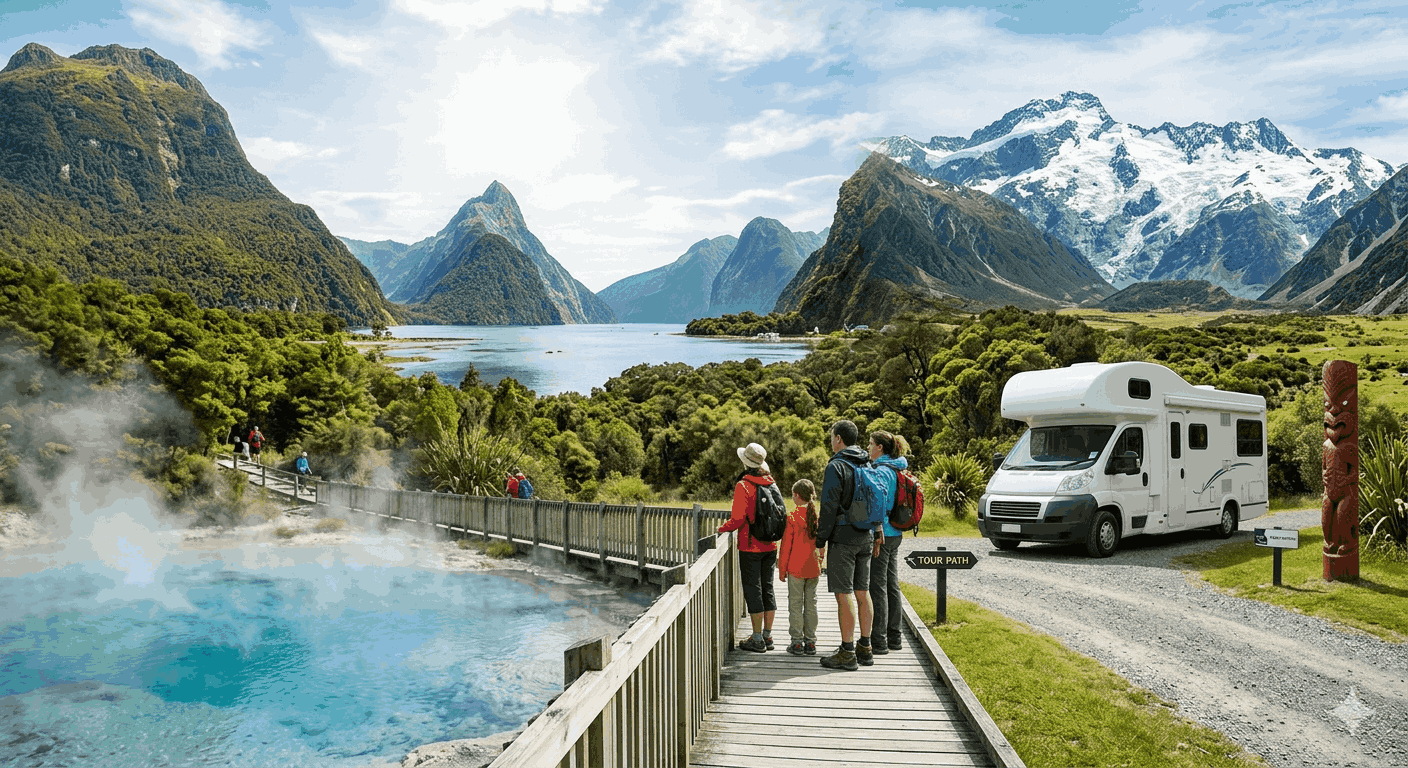
A New Zealand tour that includes the North Island brings together indigenous Maori heritage, active volcanic terrain, lush native forests, and relaxed coastal towns. Geothermal hubs around the central plateau show how active the ground is beneath the surface, with steaming vents, mineral terraces, and warm thermal pools woven into everyday life. Engaging with cultural experiences led by local Maori hosts, respecting traditional protocols, and listening to stories connected to specific mountains and waterways adds real depth beyond standard sightseeing.
Away from thermal basins, the North Island surprises many visitors with its variety of bays, rolling green hills, and forested ridges. One morning might feature a walk beneath tall native trees or a ferry ride to a coastal island, while another brings fresh seafood by the harbor or a relaxed stroll through a lively town center. Because attractions often sit in distinct regional pockets, grouping nearby stops together keeps transit manageable and leaves room for unhurried meals.
Balancing Active Sightseeing With Quiet Recovery Time
It is easy to overpack a North Island schedule when coastal walks, boat outings, cultural evenings, and thermal baths all compete for your attention. Leaving open slots in your day lets you rest tired legs, read by the water, or pivot when wind or rain changes outdoor plans. A lighter afternoon followed by a warm soak or an early night often pays off the next morning with steadier energy and better focus.
South Island Adventures: Alpine Passes, Lakes, and Fjords
Crossing over to the South Island gives a New Zealand tour a bolder, more rugged scale defined by soaring alpine ranges, clear glacial lakes, and deep coastal fjords. Hubs such as Queenstown sit framed by steep peaks and alpine water, offering everything from high-energy jet boat rides and canyon swings to quiet lakeside walks and nearby valley excursions. Even travelers who skip extreme sports find plenty to enjoy in surrounding mountain towns, historic gold-rush settlements, and sweeping high-country views.
Fiordland in the southwest delivers some of the most memorable scenery in the country, where steep forested cliffs plunge straight into dark water and waterfalls streak down rock faces after rain. Reaching the fjords usually means an early start along a scenic alpine road, so keeping the rest of that day gentle makes the outing far more enjoyable. Cloudy or rainy weather rarely ruins these landscapes; instead, it often heightens the atmosphere and sends extra waterfalls cascading down sheer walls.
Preparing for Fast-Changing Alpine Weather
Mountain weather on the South Island can shift dramatically within a few hours, even during warmer months. A bright, mild morning beside a lake can turn brisk, windy, or wet once you gain elevation or head out on open water. Packing breathable layers, a dependable waterproof shell, supportive walking footwear, and sun protection keeps you comfortable across changing conditions without weighing down your luggage.
Timing Your Trip and Packing for Versatile Comfort
Choosing the right season for your New Zealand tour depends on what kind of weather, crowd levels, and activities match your goals. Summer brings long daylight hours, lively towns, and warm coastal days alongside higher demand and busier sights, while spring and autumn often deliver crisp air, lighter crowds, and comfortable walking conditions. Winter turns southern ski fields into lively hubs for snow sports while keeping many valleys crisp and scenic.
Thoughtful packing makes moving between cities, ferries, and regional flights much easier and lighter. Focus on versatile clothing that layers easily rather than bulky outfits meant for a single moment, and bring practical items such as a daypack, motion-sickness support for winding roads or boat cruises, and a local power plug adapter. A streamlined bag makes it easier to adapt your plans whenever an inviting stop appears.
Conclusion: Start Crafting Your Own New Zealand Tour
A truly rewarding New Zealand tour is one built around your pace, curiosity, and season rather than someone else’s sprint schedule. When you give iconic places room to breathe and leave space for weather shifts or quiet detours, every region feels more personal and lasting. Ready to turn your ideas into a realistic itinerary? Share how many days you have, who is traveling with you, and whether you prefer relaxed scenic drives or active outdoor adventures, and we can shape a route tailored to your style.